Dripping Pipe Fix: How to Stop Leaking Pipes Before They Cause Major Damage
Date: June 11, 2026
A dripping pipe should be treated as urgent, not annoying. Even a slow leak can waste thousands of litres a year, soak into timber framing, and create the damp conditions mould needs to start growing within 24 to 48 hours, according to SafeWork NSW guidance on water damage and mould. A quick temporary fix buys time, but a licensed plumber should make the permanent repair.
How Do You Stop A Leaking Pipe Quickly?
Shut off the water at your main valve first; this is the single most important step. Dry the pipe thoroughly with a towel so a patch will actually bond, then wrap self-fusing silicone tape tightly around the leak with several overlapping layers, or press two-part plumbing epoxy putty into the crack and let it cure. These fixes hold for days to weeks, not forever, so book a licensed plumber for the permanent repair as soon as you can.
If you’ve found yourself standing over a hissing joint with a tea towel in one hand and your phone in the other, you’re not alone. It’s one of the most common emergency calls we get across South-West Sydney.
Why Is A Dripping Pipe More Serious Than Most Homeowners Think?
A dripping pipe is more serious than it looks because the damage happens where you can’t see it, inside wall cavities, under flooring, and around timber framing, long before a stain ever appears on the surface.
How Much Water Can A Small Pipe Leak?
A pinhole leak just 1.5mm wide can waste around 99 litres of water a day, and Sydney Water’s own published figures show a dripping tap can lose up to 2,000 litres a month. Multiply that across a quarter, and most households see it show up as a noticeable, unexplained spike on the water bill before they ever spot the leak itself.
Can A Small Leak Cause Structural Damage?
Yes, a small leak left untreated can cause real structural damage, because constant moisture softens timber, encourages rot, corrodes fixings, and gradually undermines wall linings and even foundations in older Sydney homes. We’ve opened up plaster in Campbelltown properties where a “minor” drip behind a vanity had quietly rotted out the cabinet base over several months.
When Does A Dripping Pipe Become An Emergency?
A dripping pipe becomes an emergency the moment water pressure increases, the drip turns into a steady stream, or you notice bulging ceilings, electrical fittings near the leak, or water pooling near your switchboard. At that point, stop reading and turn off your mains.
What Should You Do Immediately When A Pipe Starts Leaking?
- Turn off the water at the main shut-off valve to stop feeding the leak.
- Isolate the area, move furniture, electronics, and rugs away from the water.
- Dry the pipe completely with a towel so any patch will adhere.
- Apply a temporary fix (tape, putty, or a rubber patch and clamp).
- Call an emergency plumber to assess and repair the pipe properly.
What Causes Pipes To Leak In Sydney Homes?
Most Sydney pipe leaks come down to one of five culprits: ageing pipework, water pressure that’s too high, ground movement, tree root intrusion, or a poor installation that was never going to last.
Corrosion And Ageing Pipes
Older galvanised steel and copper pipework corrodes from the inside out, thinning the pipe wall until pinholes form. It’s one of the most common reasons we get called out to homes built before the 1990s.
Excess Water Pressure
Sydney’s mains pressure can run high in some streets, and constant stress on joints, valves and fittings eventually causes them to weep or fail outright, especially around water hammer-prone fixtures like washing machine taps.
Ground Movement And Pipe Shifting
Sydney’s reactive clay soils expand and contract with the seasons, and that movement puts ongoing strain on buried pipework. It’s a uniquely Australian problem that’s rarely discussed outside the trade.
Tree Root Intrusion
Tree roots are drawn to the moisture around pipe joints and can crack or crush sewer and stormwater lines over time, particularly in established suburbs with mature street trees.
Poor Installation Or Faulty Repairs
A rushed previous repair or an unlicensed installation is one of the most preventable causes of leaks, incorrect fittings, missing brackets, or mismatched pipe materials, which almost always resurface as a leak eventually.
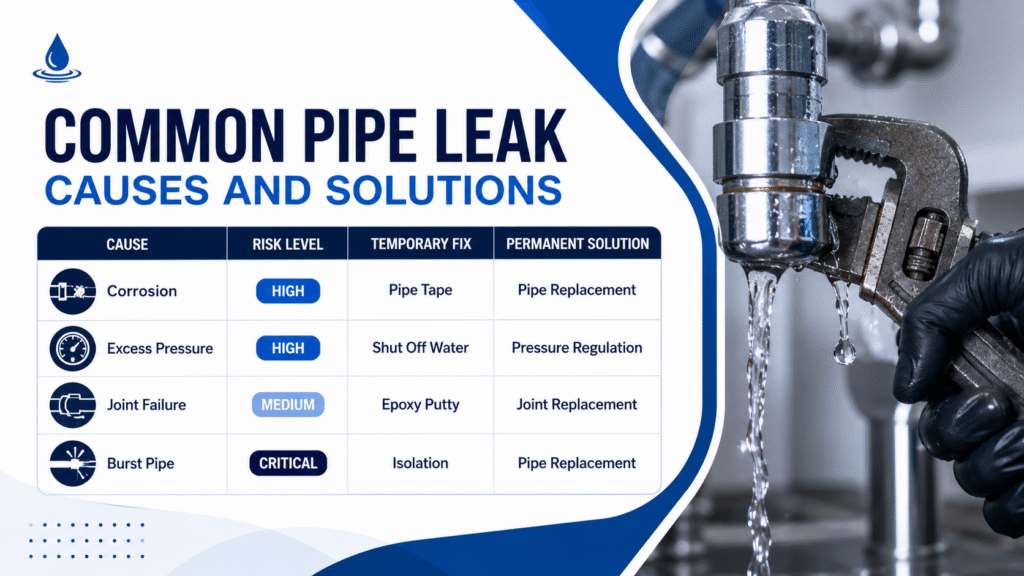
Common Pipe Leak Causes And Solutions
| Cause | Risk Level | Temporary Fix | Permanent Solution |
| Corrosion | High | Pipe tape | Pipe replacement |
| Excess Pressure | High | Shut off water | Pressure regulation |
| Joint Failure | Medium | Epoxy putty | Joint replacement |
| Burst Pipe | Critical | Isolation | Pipe replacement |
How Can You Temporarily Fix A Leaking Pipe Before A Plumber Arrives?
You can temporarily fix a leaking pipe using everyday hardware-store materials, provided the water is shut off first and the pipe surface is completely dry before you start.
Using Self-Fusing Silicone Tape
Stretch the tape as you wrap it around the pipe, overlapping each layer over the leak point several times. The tape bonds to itself under tension and forms a flexible, waterproof seal that typically holds for days to a couple of weeks.
Using Plumbing Epoxy Putty
Knead the two-part putty until the colour is even, then press it firmly into and around the crack or pinhole. It hardens within minutes and can handle moderate pressure once fully cured.
Using A Rubber Patch And Hose Clamp
Cut a small square of rubber from a gasket kit, centre it over the leak, then position a metal hose clamp over the patch and tighten it down firmly. This is one of the sturdier short-term fixes for a pinhole leak.
Using Pipe Repair Bandages
Water-activated fibreglass wraps are dipped in water, then bound tightly around the damaged section of pipe. They cure into a hard, rigid shell and can outlast tape or putty on higher-pressure lines.
Temporary fixes homeowners can try:
- Self-fusing silicone tape
- Two-part epoxy putty
- Water-activated pipe bandages
- Rubber patch and gasket kits
- Hose clamp repairs
These are all stopgaps. None of them addresses the underlying cause; corrosion, pressure, or a failed joint will still be there once the patch is in place, which is why a follow-up visit from a licensed plumber matters even after the dripping stops.
When Should You Call A Professional Leak Detection Service?
You should call a professional leak detection service the moment you suspect water is moving somewhere you can’t see it, behind walls, under slabs, or beneath flooring, because guesswork at that point usually means unnecessary demolition.
Signs The Leak Is Hidden Behind Walls
A musty smell, peeling paint, or a warm patch on the floor (from a hot water line) without any visible water are classic signs of a concealed leak that needs acoustic or thermal detection equipment to locate accurately.
Water Pressure Suddenly Drops
A sudden, unexplained drop in pressure at your taps usually points to a leak somewhere in the supply line between the meter and the fixture, rather than a problem with the fixture itself.
Recurring Leaks In The Same Area
If you’ve patched the same spot more than once, the pipe itself has likely degraded beyond a single point of failure, and a section replacement, not another patch, is the real fix.
Water Stains On Ceilings Or Floors
Brown or yellow staining on a ceiling or floor almost always means water has been tracking through the structure for some time, and our leak detection service Gregory Hills clients have repeatedly found the actual source metres away from where the stain appears.
Who Offers Same-Day Leak Detection And Repair Near Me?
Same-day leak detection and repair is offered by licensed local plumbers who carry acoustic and thermal imaging equipment on the truck, allowing them to pinpoint a hidden leak and fix it in a single visit rather than booking a separate detection appointment. Across Gregory Hills, Minto, Campbelltown and the broader Macarthur region, our emergency plumbing services team prioritises active leaks and burst pipes ahead of routine bookings, because every hour a leak runs adds to the water damage bill.
What Is The Best Leak Detection Service In Sydney?
The best leak detection service in Sydney is one that combines a fully licensed plumbing team with genuine emergency availability and the right diagnostic equipment, not just a van and a torch. Look for:
- Licensing and insurance current with NSW Fair Trading
- 24/7 emergency availability, not just business hours
- Thermal imaging cameras to spot temperature differences from hidden water
- Acoustic listening devices to pinpoint pressurised leaks under slabs
- Verified customer reviews mentioning leak detection specifically, not just general plumbing
A team using water leak detection experts‘ grade equipment can usually locate a concealed leak within an hour, which saves you the cost of speculative wall or floor demolition.
How Much Does Leaking Pipe Repair Cost In Sydney?
Leaking pipe repair in Sydney typically costs between $150 and $2,000 or more, depending on whether it’s a minor fix, a leak detection callout, or a full burst pipe repair.
You may also read this article: Leak Detection Services in Sydney: How Professionals Detect Hidden Water Leaks Quickly
Sydney Pipe Repair Cost Guide
| Service | Typical Cost Range |
| Leak Detection | $150 – $500 |
| Minor Pipe Repair | $150 – $400 |
| Burst Pipe Repair | $300 – $2,000+ |
| Emergency Plumbing Call-Out | Varies by time and access |
Figures are general estimates only and will vary based on pipe material, accessibility, and the extent of damage. Always request a written quote before work begins.
Factors Affecting Repair Costs
The biggest swing factors are how accessible the pipe is (a slab leak costs more to reach than an exposed under-sink pipe), what material it’s made from, whether after-hours rates apply, and whether any flooring, plaster, or cabinetry needs to be removed and reinstated.
How Can Homeowners Prevent Future Pipe Leaks?
Most future pipe leaks can be prevented with a handful of habits: a routine plumbing inspection every one to two years, keeping an eye on water pressure, replacing pipework once it’s nearing the end of its working life, and acting on minor leaks the moment you spot them rather than waiting.
- Schedule routine plumbing inspections to catch corrosion and worn joints early
- Monitor your water pressure and have a regulator fitted if it’s consistently high
- Replace ageing pipes proactively in homes built before the 1990s
- Address minor leaks early, before a pinhole becomes a burst pipe
People Also Ask
How to fix a leaky pipe without replacing it?
Most leaks can be temporarily sealed without replacing the pipe by using self-fusing tape, epoxy putty, or a rubber patch with a hose clamp. These hold up for days to weeks, but a permanent fix, usually a push-to-connect or compression fitting, is still needed for a lasting result.
What is the 135 rule in plumbing?
The 135 rule limits how many degrees a horizontal drain pipe can bend before reaching a vent or cleanout, capped at 135 degrees total (for example, one 90-degree and one 45-degree turn). It’s mainly a drainage design rule rather than something directly tied to supply-pipe leaks.
Will pipes burst if water is dripping?
A slow drip doesn’t necessarily mean a burst is coming, but it often signals that a pipe is already weakened by corrosion or pressure stress. Left unaddressed, that same pressure can eventually force a full split, especially in older copper or galvanised lines.
Can pipe tape stop a leak permanently?
No, self-fusing pipe tape is a temporary measure only. It’s effective for holding a small leak for days or weeks, but it doesn’t repair the underlying corrosion or damage, so the pipe section will still need a proper permanent fix.
How long can a temporary pipe repair last?
A good temporary repair, applied correctly to a dry pipe, can typically last anywhere from a few days to several weeks. Pressure, pipe material, and how well the surface was prepared all affect how long it holds before a permanent fix is needed.
Should I turn off the water for a small leak?
Yes, even a small leak should prompt you to shut off the water at the main valve while you arrange a repair. It limits ongoing water loss and gives any temporary patch a much better chance of holding.
Frequently Asked Questions
A leaking pipe should be repaired as soon as it’s noticed, ideally within 24 to 48 hours, since that’s roughly the window before damp conditions can lead to mould growth and further structural damage.
Yes. A single dripping tap can waste up to 2,000 litres a month, according to Sydney Water, and a hidden pipe leak can waste even more without you noticing until the bill arrives.
It depends on your policy. Many Australian home insurance policies cover sudden, accidental water damage but exclude gradual leaks or wear-and-tear, so it’s worth checking your specific policy wording or speaking with your insurer.
Pipes typically burst suddenly due to a combination of long-term corrosion, excessive water pressure, ground movement, or freezing temperatures, weakening the pipe wall until it can no longer contain normal pressure.
Yes. Hidden leaks create the constant moisture mould needs, and growth can begin within 24 to 48 hours of water exposure according to SafeWork NSW, often well before any visible staining appears.
Plumbers use acoustic listening devices to pick up the sound of pressurised water escaping, along with thermal imaging cameras to spot temperature differences caused by moisture, allowing them to pinpoint a leak without unnecessary digging or demolition.
Emergency pipe repair costs vary widely, generally from around $150 for a minor fix up to $2,000 or more for a burst pipe, depending on access, time of day, and the extent of the damage.
Need fast leaking pipe repair in Sydney? Book a same-day leak detection service today and stop a small drip from becoming tomorrow’s major plumbing emergency. Our licensed plumbers serve Gregory Hills, Minto, Campbelltown and the wider Macarthur region with genuine emergency response, not just a callback the next morning.