
How Often Should You Get Your Home Plumbing Inspected?
Date: August 7, 2026
If you’re like most homeowners, your plumbing only gets a moment’s thought when something goes wrong – a dripping tap, a gurgling drain, or worse, water pooling under the kitchen sink at 11 pm on a Sunday. But plumbing systems, much like cars or roofs, work best when they’re checked before problems start rather than after.
So, how often should you actually get your home plumbing inspected? As a general rule, most Sydney homes benefit from a full plumbing inspection every 12 to 24 months, with more frequent checks for older properties, homes with visible wear, or properties on bore or tank water. That’s the short answer. The longer answer depends on your home’s age, your water pressure, the materials your pipes are made from, and a few other factors we’ll walk through below.
This guide draws on what we see day-to-day as licensed plumbers working across Sydney, including growth corridors like Gregory Hills, where a mix of new builds and established homes means inspection needs vary street to street.
Why Regular Plumbing Inspections Matter
A plumbing inspection isn’t about finding an excuse to sell you work. It’s a structured check of the parts of your system you can’t see – the pipework behind walls, under slabs, and beneath the yard – combined with a review of the parts you can see, like taps, valves, and your hot water unit.
Most plumbing failures don’t happen suddenly. A corroded pipe joint, a slowly failing pressure valve, or tree roots creeping into a sewer line all develop over months or years. An inspection catches these issues while they’re still cheap and simple to fix, rather than after they’ve turned into a burst pipe or a collapsed drain.
There’s also a cost-of-living angle here. A hot water system running past its efficient life, or a hidden leak feeding into your water bill, can quietly cost a household hundreds of dollars a year without anyone noticing until the bill arrives.
How Often Should Different Parts of Your Plumbing Be Checked?
Not every part of your plumbing ages at the same rate, so a single blanket answer doesn’t tell the full story. Here’s a more realistic breakdown.
General Plumbing Inspection: Every 1–2 Years
A whole-of-home inspection every one to two years is a sensible baseline for most Sydney properties. This typically covers visible pipework, tap and valve condition, water pressure, drainage flow, and a visual check of accessible fittings.
Hot Water Systems: Every 12 Months
Hot water units, whether gas, electric, or heat pump, benefit from an annual check. Sacrificial anodes in storage tank systems corrode over time and need replacing before the tank itself starts to rust. If your hot water is over eight years old, or you’ve noticed rusty water, reduced pressure, or odd noises from the unit, it’s worth arranging a hot water repair service in Sydney sooner rather than later.
Drains and Sewer Lines: Every 1–2 Years, or After Recurring Blockages
Sydney’s clay soils and established street trees mean root intrusion into sewer lines is a genuinely common issue, particularly in older suburbs. If your home is on a block with mature trees nearby, or you’ve had more than one blocked drain in the past year, a camera inspection is worth doing proactively. Our team handles blocked drains repairs across Sydney and can usually tell within a short camera inspection whether root intrusion, pipe collapse, or simple debris build-up is the cause.
Leak Detection: As Needed, or Annually for Older Homes
Not all leaks announce themselves with a wet patch on the ceiling. Slab leaks and underground leaks can run for weeks before they become visible, showing up first as an unexplained jump in your water bill or a water meter that keeps ticking over when nothing’s turned on. If you suspect a hidden leak, our leak detection service uses acoustic and thermal equipment to pinpoint the source without unnecessary digging or wall removal.
Water Pressure and Valves: Every 2 Years
Pressure limiting valves are required on most Sydney properties connected to Sydney Water’s mains supply, and they do wear out. A valve that’s failed can push excessive pressure through your whole system, shortening the life of taps, hoses, and appliances.
Factors That Change How Often You Need an Inspection
There’s no one-size-fits-all schedule, and a good plumber will tell you that rather than pushing a generic maintenance plan. Here’s what actually shifts the timeline:
- Age of the home. Homes built before the 1990s may still have galvanised steel or older copper pipework, which is more prone to corrosion than modern copper or PEX. These properties generally benefit from more frequent checks.
- Tree proximity. Established gums, figs, and other large-rooted trees near sewer lines increase the likelihood of root intrusion.
- Water quality and pressure. Areas with harder water or consistently high mains pressure put more strain on fittings and hot water units.
- Renovation history. If a property has had extensions or renovations, it’s worth confirming that plumbing work was compliant and properly connected – this is especially relevant for homes bought secondhand where you weren’t present for the build.
- New builds and recently developed suburbs. Newer homes, like many in Gregory Hills, generally need less frequent full inspections in the first several years, but it’s still worth a check after the first year to catch any settling-related issues or minor installation faults before warranty periods lapse.
A Homeowner Scenario: “Do I Really Need to Call Someone for This?”
Say you notice your bathroom drain is running a little slower than it used to, but it’s not blocked yet. Do you wait, or do you call?
This is a genuinely common grey area, and the honest answer is: it depends on the pattern. A single slow drain after a hair wash or a big cook-up is usually nothing. A drain that’s been getting progressively slower over several weeks, especially if it’s paired with gurgling sounds from other fixtures, is worth having looked at before it becomes a full blockage – because by that point, you’re often looking at a Saturday night emergency call rather than a scheduled visit.
As a rough decision guide:
- Minor and isolated (one slow drain, one dripping tap) – Monitor, book a routine inspection within the next month or two.
- Recurring or spreading (multiple slow drains, a tap that’s now leaking constantly, rising water bills) → Book an inspection within the next week or two.
- Active water damage, no hot water, or sewage backing up – This is an emergency. Stop using the affected fixtures and call a 24/7 emergency plumber in Sydney straight away.
Seasonal Considerations for Sydney Homes
Sydney doesn’t get the deep freezes that cause pipes to burst in southern states, but the seasons still affect your plumbing:
- Summer puts pressure on hot water systems (ironically, from increased usage for showers after outdoor activity) and can expose slab leaks as ground movement shifts with dry conditions.
- Autumn is a sensible time for a drain check, since falling leaves and debris are a common cause of gutter and stormwater blockages heading into the wetter months.
- Winter sees a spike in hot water system failures simply because units are working harder and older components give out under the extra load.
- Spring rainfall after a dry winter can reveal weaknesses in stormwater and sewer connections that weren’t obvious when the ground was dry.
A general inspection timed for early autumn or early spring tends to catch the most issues before they turn into emergencies at the least convenient time of year.
What Does a Professional Plumbing Inspection Actually Include?
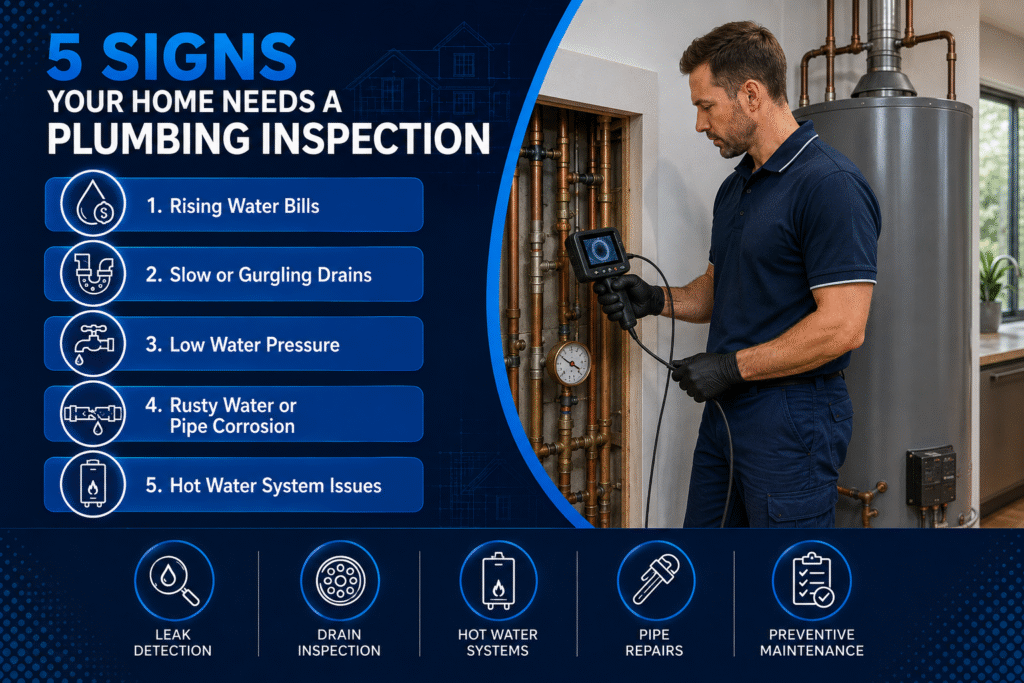
A proper inspection from a licensed plumber typically covers:
- Visual assessment of all accessible pipework, taps, and fittings
- Water pressure testing at multiple points
- Hot water system check, including anode condition (where accessible) and temperature settings
- Drain flow assessment, with camera inspection if slow drainage or recurring blockages are reported
- Check of pressure limiting valves and backflow prevention devices
- Leak detection at fixtures and, where warranted, using specialist equipment for hidden leaks
- A written summary of findings, with photos where relevant, and honest recommendations – not a sales pitch
Cost Considerations
Inspection costs vary depending on property size, age, and what’s included, so it’s reasonable to ask for a clear, itemised quote before any work begins. What matters more than the exact figure is transparency: a trustworthy plumber will explain what they’ve found, why it matters, and what your options are, including the option to simply monitor an issue rather than act on it immediately. Be wary of anyone pushing urgent, expensive work off the back of a routine inspection without clear evidence – a second opinion is always a reasonable request.
Plumbing Standards and Compliance
Plumbing work in New South Wales, including inspections, repairs, and installations, is governed by the Plumbing Code of Australia and relevant NSW Fair Trading licensing requirements. Any plumber carrying out regulated work on your property should be licensed, and for larger jobs, should provide a Certificate of Compliance. It’s worth asking to see licensing details before any work begins – a legitimate plumbing business will have no issue providing this.
Local Focus: Plumbing Inspections in Gregory Hills
Gregory Hills has grown quickly over the past decade, and that growth brings a specific set of plumbing considerations. Newer estates generally have modern PVC and copper plumbing, which holds up well, but rapid development also means variable soil conditions from earthworks, and occasionally, minor installation inconsistencies that only show up once a system’s been in use for a year or two.
If you’re in Gregory Hills and it’s been a while since anyone’s looked at your plumbing, or you’ve just moved into a home you didn’t build yourself, it’s worth booking a check. Our local team provides emergency plumber services in Gregory Hills, along with hot water repairs and leak detection, and knows the area’s common issues firsthand.
Preventive Maintenance You Can Do Between Inspections
Professional inspections matter, but a few simple habits between visits go a long way:
- Check under sinks every few months for early signs of moisture or corrosion
- Keep an eye on your water meter when no water is being used – movement suggests a leak
- Avoid pouring fats, oils, or coffee grounds down kitchen drains
- Test your hot water pressure relief valve annually if it’s accessible
- Know where your main water shut-off valve is, so you can act fast in a genuine emergency
For a more detailed walk-through of maintenance you can handle yourself, our guide on preventing plumbing problems in Sydney covers simple, low-cost habits that reduce the odds of an emergency call-out.
Frequently Asked Questions
Homes built before the 1990s, or those with original pipework still in place, generally benefit from an inspection every 12 months, particularly if there’s a history of corrosion, low pressure, or recurring blockages.
Not always annually, but a check every one to two years is still sensible, mainly to catch any installation issues, settling-related movement, or early wear before they become bigger problems.
Active leaks causing water damage, no hot water, gas smells, or sewage backing up are emergencies and need immediate attention. Slow drains, minor drips, or aging fixtures without active damage can usually wait for a scheduled visit.
It can, particularly if a hidden leak is found and repaired. Unexplained increases in water usage are one of the more common signs our team is asked to investigate.
You can do basic visual checks yourself between professional visits, but a full inspection – particularly anything involving hot water systems, pressure valves, or underground pipework – should be carried out by a licensed plumber to meet compliance requirements and to properly assess issues you can’t see.
Book a Plumbing Inspection With ProDrip Plumbing
Our team is licensed, insured, and family-owned, with plumbers available 24/7 for genuine emergencies and a 60-minute response time across our service areas. We work on transparent, upfront pricing, with no surprises once the job’s underway.
Whether you need a routine check, help tracking down a hidden leak, or you’re dealing with a blocked drain right now, we’re happy to talk through what’s actually needed for your property – not what’s easiest for us to sell.